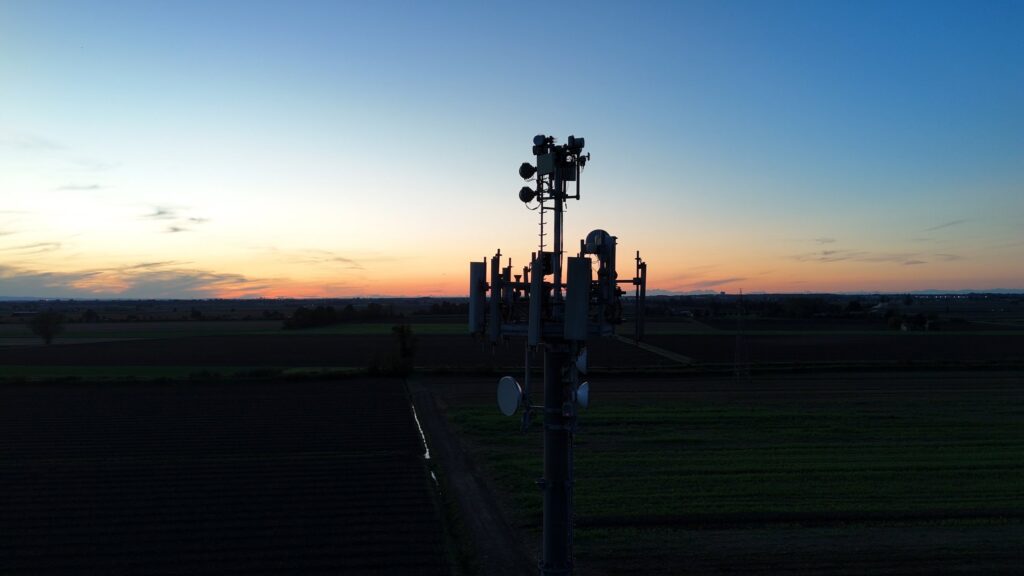
Wireless industry trends are being shaped by rising network demand, continued 5G densification, new spectrum and a changing cost of capital. This article explains the wireless infrastructure trends Symphony Towers Infrastructure is watching and what they mean for owners of rooftops and land that host cell sites.
Key takeaways
- U.S. mobile data use is still growing, though more slowly than a few years ago.
- Small cells now make up a large share of U.S. cell sites, but they add to the network rather than replace rooftops and towers.
- New spectrum auctions are coming, and new spectrum usually means new equipment on existing sites.
- Carrier mergers lead to network reviews, which can put overlapping leases at risk.
- Location still decides which sites carriers keep and upgrade.
What Is Driving Wireless Network Demand?
Americans used 159.3 trillion megabytes of mobile data in 2025, up 20% from 2024 (CTIA, 2026). Growth has slowed from 32% the year before, but usage still rose nearly 60% over two years. Worldwide, network data traffic grew 22% year over year in the first quarter of 2026, with North America among the main drivers, and 5G carried 48% of all mobile data by the end of 2025 (Ericsson Mobility Report, June 2026).
Home internet is adding to the load. Nearly 16 million Americans now rely on 5G networks for internet at home (CTIA, 2026). AI is also changing how networks are used: Ericsson found that uplink traffic, the data devices send to the network, is growing faster than downlink at 43 of 55 service providers it studied, and its scenarios show uplink traffic could be three times higher in 2031 than in 2025 with added AI use (Ericsson, 2026).
Wireless Infrastructure Trends: 5G Densification and Small Cells
Small cells now make up nearly 40% of all U.S. cell sites, and small cell deployments have grown nearly 120% since 2018 (CTIA, 2026). In our view, small cells add capacity on busy blocks, but they complement rather than replace macro rooftops and towers, which still provide coverage across a market. Operators invested nearly $30 billion in U.S. wireless networks in 2025 (CTIA, 2026). Read more about how 5G affects cell tower lease value.
New Spectrum Means New Equipment
The One Big Beautiful Bill Act, signed July 4, 2025, restored the FCC’s authority to auction spectrum through 2034. It requires the FCC to auction at least 100 MHz of the upper C-band (3.98 to 4.2 GHz) by July 4, 2027 (Phillips Lytle, 2026). When carriers win new spectrum, they generally deploy it by adding or upgrading antennas and radios at existing sites, which can lead to lease amendments for site owners.
Carrier Consolidation and Network Reviews
T-Mobile closed its acquisition of UScellular’s wireless operations in August 2025 and expects its combined footprint to grow from 9,000 to 12,000 sites in the affected markets (Fierce Network, 2025). When networks combine, carriers review overlapping locations. Sites that fill a real coverage or capacity need tend to be kept and upgraded, while leases at redundant locations can be at risk of non-renewal or termination.
Cost of Capital and Infrastructure Investment
Higher interest rates in 2023 and 2024 slowed spending across the industry and led to well-publicized cost cuts. The Federal Reserve made its third rate cut of 2025 in December (Real Estate In-Depth, 2025), which eased some of that pressure. Lease buyout offers reflect the cost of capital as well as the lease itself, so rate moves can change what an owner is offered.
What These Cell Tower Industry Trends Mean for Site Owners
| Trend | What is driving it | What it means for site owners |
|---|---|---|
| Rising data use | Video, home internet, AI apps | Carriers still need well-placed sites |
| 5G densification | Demand for capacity and low latency | More sites in dense areas, so location matters |
| New spectrum | FCC auctions through 2034 | Upgrades and possible lease amendments |
| Carrier consolidation | Mergers and network integration | Overlapping leases may be reviewed |
| Cost of capital | Interest rate changes | Can affect buyout offers |
For owners, these cell tower industry trends point to three practical steps. First, know your lease: the escalator, remaining term, renewal options and termination rights. Second, review any amendment request before you sign it, since upgrades often come with new terms. Third, understand your options, from keeping the monthly rent to converting it into a lump sum. Read more about telecom trends and risks and cell tower lease buyouts.
Wondering how these trends affect your cell site lease? Request a free, no-obligation lease review. Get My Lease Review
Symphony Towers’ Perspective
We expect demand for well-located rooftops and towers to hold up through these changes. Carriers will keep adding capacity, and sites that fill a real coverage or capacity need will stay valuable. For site owners, the best preparation is to understand your lease and your options before a carrier request, a merger or a rate change makes the decision more urgent.
Wireless Industry Trends: FAQs
What are the biggest wireless industry trends right now?
Rising mobile data use, 5G densification with more small cells, new spectrum auctions and carrier consolidation. U.S. mobile data use grew 20% in 2025, and the FCC must auction new upper C-band spectrum by July 2027. Each trend affects which cell sites carriers keep, upgrade or add.
How does AI affect wireless network demand?
AI apps send more data from devices to the network, not just to devices. Ericsson found uplink traffic growing faster than downlink at most providers it studied and projects uplink could triple by 2031 with added AI use. More traffic in both directions means carriers need more capacity at well-placed sites.
What is 5G densification and why does it matter to site owners?
Densification means adding more sites, often small cells, so a network can carry more traffic in busy areas. For owners of rooftops and land in dense or growing markets, it can mean new lease opportunities and equipment upgrades at existing sites.
How do cell tower industry trends affect lease values?
Lease value depends on the rent, escalator, remaining term, number of carriers and how hard the location is to replace. Trends that raise demand for a location can support value, while consolidation can put redundant sites at risk. The cost of capital also affects buyout offers.
Should I convert my cell site lease into a lump sum?
It depends on your goals and your lease. A buyout trades future rent for capital today and removes the risk of termination, while keeping the lease means steady monthly income. A free lease review can show you what your lease is worth before you decide.