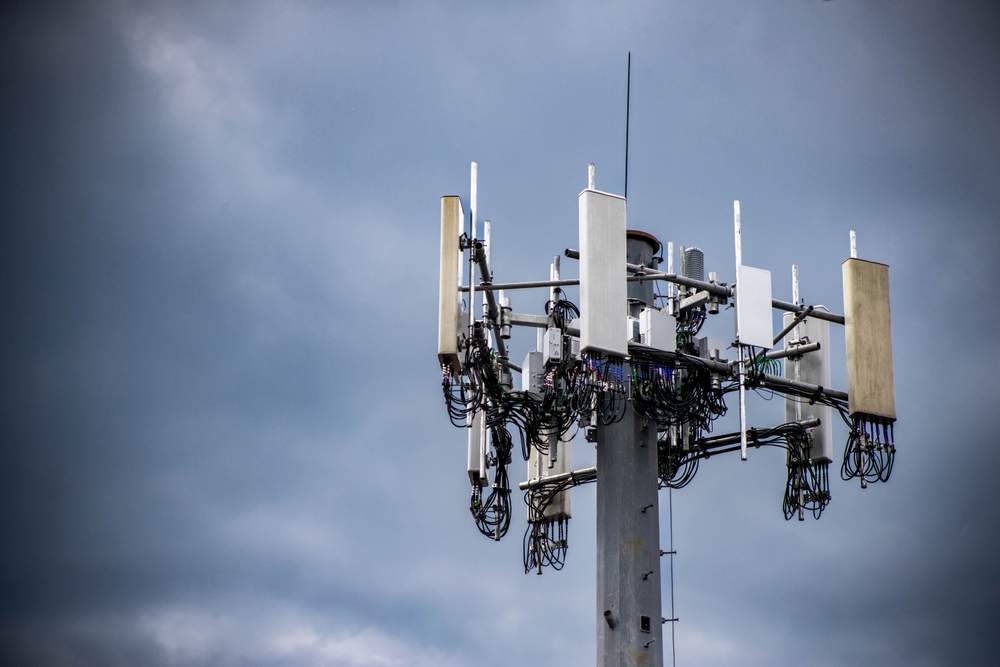
Last year we looked at and dispelled five common misconceptions around telecom lease buyouts – lump sum payments given to a property owner in exchange for the right to collect the future rent from their telecom assets.
As demand for comprehensive wireless coverage and increased bandwidth steadily increases, carriers work to enhance their networks by deploying new infrastructure, which is often sited on real estate and provides landlords and property owners recurring monthly rent payments. Companies like Symphony Towers Infrastructure specialize in telecom lease buyouts, and provide lump sum payments to property owners in exchange for the right to collect the future rent as specified in these leases. This enables owners to access years of these rent payments in one big distribution up front.
The telecom lease buyout model continues to become more prominent – and potentially valuable to real estate owners/landlords/investors, so let’s discuss five more common misconceptions.
#1. Only large commercial properties qualify
All types of properties can host telecom infrastructure, so they can qualify for telecom lease buyouts. These include commercial buildings like warehouses and office buildings, residential structures like apartments and condominiums, non-profit institutions like churches, schools and colleges, and recreational facilities like speedways and country clubs, as well as open land.
Key factors include the location of the real estate in question, the telecom equipment on the property, how it plugs into an existing carrier network and the overall value of the property/land in question. The type of property may play a role in how the deal is structured, but usually does not rule out the possibility of a telecom lease buyout on its own. Telecom lease buyout firms like Symphony work with many different types of property owners. Modern telecommunications equipment is very versatile and ranges from massive cellular towers to compact networking equipment that can fit small rooftops. The idea that only large commercial properties can participate in these types of transactions is a myth.
#2. A buyout means losing long-term revenue
While it is true that a telecom lease buyout ends a long-term recurring income stream, that amount of potential future capital – and at times more – becomes real capital, provided in bulk, up front. Fair value for the asset is still provided, just in a condensed timeframe, instead of over years or decades. This income can immediately be put to professional and personal uses: starting a new business; making major upgrades or improvements to a property; investing in stocks, bonds or other vehicles; or contributing to a retirement fund; funding additional education or medical expenses; or paying down debt. The key point is that a fair lifetime value for the asset is paid in a lump form up front.
#3. The buyout amount is just a simple multiple of rent
It’s true that telecom lease buyouts are typically calculated based on multiples of the current annual or monthly rent, and while this is a primary factor, it isn’t the only one. The higher the monthly rent, the larger the potential buyout offer. Specific lease terms, especially incremental rent increases that happen on a set schedule, are another one. Many cell tower leases increase rent by a small percentage annually, which enhances its value and makes it more attractive to investors.
The financial and credit profile of a tenant is yet another consideration, especially if it is a major carrier with a good market reputation like Verizon or AT&T. Still another factor that comes into play is the location of the property and the demand level for telecom coverage in that specific area. Urban locations with a dense population can command higher lease buyout offers, while rural ones with little population may be priced lower. If there are alternative sites – towers or other installations in the region – that could lower the buyout offer. If there are few alternative locations, the existing site in question does become more valuable and can net a higher offer.
Finally, the evolution and deployment of new telecommunications technology, such as the rollout of 5G and eventual 6G networks, can influence perception of the value of a lease. Towers that are key to the deployment of new technologies can enhance a buyout’s total price.
#4. There will be negative tax repercussions
Like any financial transaction, and especially one that results in a windfall, telecom lease buyouts do have tax implications, but they aren’t by definition negative. A skilled accountant and tax attorney will almost certainly be part of the process. One core tax issue that arises is determining whether the lump sum payment is viewed as ordinary income or as a capital gain. This distinction becomes central to the net value of the transaction because it directly impacts the amount of tax owed. Grasping this difference is a fundamental part of effective tax planning related to the transaction and for maximizing the net proceeds from the sale.
Other factors include federal tax implications related to the amount of time the asset was held, possible recapturing of depreciation, and additional taxes that are possibly applicable to investment income. Tax considerations related to state and sometimes local laws are also at play in these deals, and these can vary significantly nationwide. Symphony can help advise on all these issues and advise on strategies to mitigate the tax impact of these transactions.
#5. Once I sell, I can’t do anymore telecom deals
This is untrue because it fundamentally misconstrues what a telecom lease buyout is. A telecom lease buyout is not a sale of the real estate asset. A telecom lease buyout is simply a lump-sum payout given to the property owner in exchange for the right to receive rental income forward in time as per the original telecom lease agreement. Nothing around property ownership, rights, or other obligations the tower company, wireless carrier or property owner has in the original lease agreement changes.
Like other real-estate transactions, specific terms of a telecom lease buyout are carefully spelled out in a contract and recorded in the local land registry. Even if property changes owners or the cell tower tenant changes at some point in the future – both separate and distinct agreements from the lease buyout itself – outstanding obligations are honored and everyone’s rights remain protected. So conceivably, a property owner could enter into lease agreements with other carriers if there is sufficient space on the property for other separate installations.
Symphony Towers Infrastructure – An Industry-leading Provider for Telecom Lease Buyouts
Led by longstanding industry professionals possessing decades of experience in both real estate and telecommunications, Symphony has access to billions in capital to invest in existing wireless infrastructure sites – cellular towers, rooftop installations and more. We’ve become one of the fastest-growing businesses in U.S. wireless infrastructure by successfully delivering outstanding value to cellular site and tower owners, as well as other participants in the complex telecommunications ecosystem.
Real estate owners see Symphony as the partner of choice for providing market-leading value, a wide range of partnership options, negotiation speed, and certainty of execution to each acquisition offer.
Smart real estate owners compare offers when considering a tower or lease buyout, but ultimately choose us for the considerable financial boost and transformative possibilities our lease buyouts deliver.